
Casinos have evolved far beyond simple gambling halls into destinations that celebrate cultures from around the world. Many famous casinos use cultural themes in their architecture, design, and entertainment to create unique experiences that transport visitors to different places and time periods. From ancient Egyptian pyramids to futuristic Asian cities, these establishments blend gaming with cultural storytelling.
The appeal of themed casinos lies in their ability to offer more than just slot machines and card tables. They provide immersive environments where guests can experience elements of different civilizations while enjoying modern entertainment. The Luxor in Las Vegas recreates ancient Egypt with its pyramid structure, while other venues draw inspiration from European elegance or Asian traditions.
Cultural themes have become a key factor in attracting visitors and setting casinos apart from their competitors. These themes influence everything from building design to the types of restaurants and shows offered inside. Understanding how these famous casinos use cultural elements helps explain why they have become major tourist destinations that appeal to people beyond just gamblers.
Overview of Casinos With Cultural Themes
Cultural-themed casinos blend gambling entertainment with design elements that represent specific civilizations, time periods, or geographic regions. These establishments use architecture, interior design, and entertainment programming to transport visitors into distinct cultural experiences while they play games and enjoy amenities.
Defining Cultural-Themed Casinos
Cultural-themed casinos incorporate specific cultural references into their physical design and operational identity. The Luxor Hotel and Casino in Las Vegas exemplifies this approach with its pyramid structure and Egyptian-inspired interiors that recreate elements of ancient civilization. These venues go beyond basic decoration by integrating cultural elements into multiple aspects of the guest experience.
The themes typically draw from recognizable cultural sources. Ancient Egypt, European palaces, Asian traditions, and futuristic cities serve as popular inspiration. The design elements include architectural features, art installations, music selections, and staff uniforms that align with the chosen theme.
These casinos aim to create immersive environments where visitors feel transported to different places or eras. The theme affects everything from the exterior building shape to the patterns on carpets and the style of chandeliers.
Role of Theme in Casino Identity
Themes establish distinct identities that differentiate casinos from competitors. A European palace-inspired casino communicates prestige and refinement through chandeliers, fine art, and classical music. This creates associations with high culture and sophisticated entertainment.
The theme influences how guests perceive and remember the venue. Gaming destinations use cultural themes to appeal to specific audiences and create memorable experiences. The visual and atmospheric elements work together to build brand recognition.
Themes also affect operational decisions. Staff training, entertainment programming, and restaurant concepts align with the cultural identity. A casino themed around ancient Rome might feature Mediterranean cuisine and classical architecture rather than modern minimalist design.
Trends in Themed Casino Development
Modern themed casinos function as cultural hubs that blend multiple global influences. Las Vegas, Macau, and Monte Carlo operate as international crossroads where diverse cultural elements meet contemporary gaming technology.
Current development trends emphasize authenticity in cultural representation. Designers research historical details and architectural principles to create believable environments. The focus has shifted from superficial decoration to comprehensive cultural experiences.
Themed casinos increasingly incorporate local cultural elements alongside international themes. This approach celebrates regional diversity while attracting global visitors. The trend reflects growing interest in culturally immersive entertainment that combines gaming with educational and artistic value.
World-Famous Casinos Inspired by Global Cultures
Some of the world’s most recognizable casinos draw their designs and themes from historic civilizations and cultural traditions. These properties transport visitors to different times and places through architecture, interior design, and carefully crafted details.
Venetian Macau and Italian Renaissance
The Venetian Macau stands as the largest casino building in the world. It recreates the romantic atmosphere of Venice with hand-painted frescoes on vaulted ceilings and detailed replicas of Italian landmarks. The property features its own Grand Canal complete with gondolas and singing gondoliers who navigate the indoor waterways.
Guests walk through St. Mark’s Square replicas and pass under the Rialto Bridge while exploring the gaming floors. The casino floor spans over 550,000 square feet with thousands of slot machines and gaming tables. Gold leaf details and marble columns throughout the property mirror the craftsmanship of Italian Renaissance palaces.
The Venetian Macau opened in 2007 and cost $2.4 billion to build. It combines authentic Italian architectural elements with modern gaming technology.
Caesars Palace and Ancient Rome
Caesars Palace in Las Vegas has maintained its Roman Empire theme since opening in 1966. White marble columns line the property’s entrance, and reproductions of classical Roman statues stand throughout the casino floor and gardens. The Forum Shops feature a painted sky that cycles from dawn to dusk, creating an outdoor Roman marketplace atmosphere indoors.
The property includes replicas of famous Roman fountains and architecture. Staff members in certain areas wear toga-inspired uniforms. The Colosseum theater hosts world-class entertainment in a venue designed after the ancient amphitheater in Rome.
Key Roman Elements:
- Reproduction of Michelangelo’s David statue
- Temple-style architecture
- Roman goddess and emperor statuary
- Cypress trees and Italian landscaping
Paris Las Vegas and French Elegance
Paris Las Vegas features a half-scale replica of the Eiffel Tower that rises 540 feet above the Strip. The property recreates Parisian streets with cobblestone walkways and French street lamps. Guests find replicas of the Arc de Triomphe, the Paris Opera House, and the Louvre.
The casino floor uses the layout and design elements of French belle époque style. Ornate ironwork, street-side cafe settings, and French provincial details appear throughout the property. The Eiffel Tower observation deck offers views of Las Vegas from 460 feet up.
Restaurant signs use French names and menus feature French cuisine. The property includes a reproduction of the Montgolfier balloon, and the facade displays painted Parisian building fronts with balconies and shuttered windows.
Luxor Las Vegas and Ancient Egypt
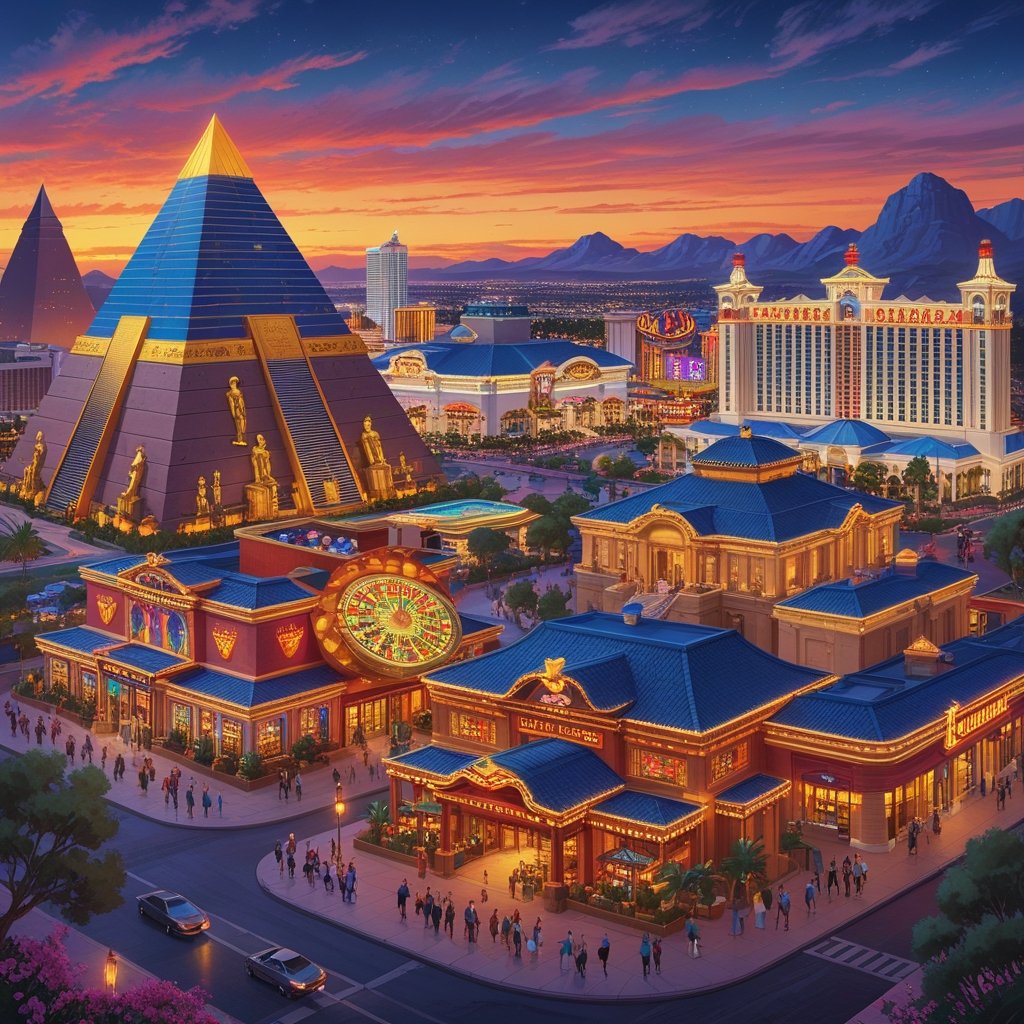
The Luxor takes its name from the Egyptian city known for ancient temples. The property’s exterior forms a 30-story pyramid covered in black glass. A sphinx statue guards the entrance, measuring 110 feet tall and weighing 4,407 tons. The pyramid structure makes it one of the most recognizable buildings in Las Vegas.
Inside, guests find hieroglyphic-covered columns and Egyptian deity statues. The casino floor sits beneath the hollow pyramid, where a powerful light beam shoots from the apex into the night sky. Replicas of Egyptian artifacts and obelisks line the walkways.
The property includes recreations of temple architecture with lotus-shaped columns. Ancient Egyptian motifs appear in carpeting, wall decorations, and gaming machine designs throughout the 120,000-square-foot casino floor.
Cultural Experiences Beyond Gaming
Themed casinos offer visitors immersive cultural experiences through their architecture, live entertainment, and authentic cuisine that showcase traditions from around the world.
Authentic Architectural Features
Casino design reflects the cultural identity of different regions and time periods. The grandeur of Macau’s gaming palaces showcases Asian architectural elements, while Monte Carlo’s casinos feature elegant European design. These buildings use local craftsmanship and building styles that mirror their locations.
Many casinos recreate famous landmarks and historical settings. The Venetian in Las Vegas reproduces Italian Renaissance architecture with detailed replicas of Venice’s canals and bridges. Caesars Palace features Roman columns, statues, and frescoes that transport guests to ancient Rome. Paris Las Vegas includes a half-scale Eiffel Tower and Arc de Triomphe.
The architectural details extend beyond exteriors. Interior spaces use authentic materials, decorative elements, and color schemes that match their cultural themes. These features create environments where visitors can experience different cultures without traveling across the globe.
Cultural Events and Performances
Live entertainment brings cultural themes to life through music, dance, and storytelling. The Hard Rock Hotel and Casino in Punta Cana hosts Dominican music and dance performances that showcase local traditions. These shows give guests direct exposure to regional art forms.
Many casinos book residencies for musicians who perform traditional and contemporary music from various cultures. Theatrical productions feature costumes, choreography, and narratives drawn from specific cultural backgrounds. Some venues display art installations by local and international artists.
Cultural performances turn casino visits into educational experiences. Guests learn about different traditions while enjoying professional entertainment that goes beyond standard gaming activities.
Cuisine and Dining Inspired by Tradition
Themed casinos feature restaurants that serve authentic dishes from the cultures they represent. Italian-themed properties offer pasta, pizza, and regional specialties prepared using traditional methods. Asian-themed casinos provide dim sum, sushi, and other cuisine from China, Japan, and other countries.
Celebrity chefs and trained culinary teams use authentic ingredients and cooking techniques. Menu items reflect regional flavors and traditional recipes passed down through generations. Some restaurants import specialty ingredients to maintain authenticity.
Dining spaces match the overall theme with appropriate decor, table settings, and serving styles. Staff members sometimes wear traditional attire and explain the cultural significance of dishes. These restaurants give visitors a complete sensory experience of different food cultures.
Impact of Cultural Themes on Tourism and Entertainment
Cultural themes transform casinos from simple gambling venues into major tourist destinations that draw millions of visitors annually. These themed environments create memorable experiences that extend far beyond gaming tables and slot machines.
Influence on Tourist Attraction
Themed casinos serve as powerful magnets for international tourism. Las Vegas properties like The Venetian and Paris Las Vegas attract visitors who want to experience Italian canals or the Eiffel Tower without international travel. These cultural replicas make casinos into landmarks worth visiting for their architectural and design elements alone.
Asian-themed casinos in Macau draw tourists seeking luxury experiences rooted in Chinese culture and tradition. The blend of Eastern aesthetics with Western gaming concepts creates unique destinations that appeal to both local and international guests. Properties featuring cultural themes often become photo destinations and social media attractions, generating additional marketing value.
Cities with culturally themed casinos see increased visitor spending across hotels, restaurants, and entertainment venues. These themed properties often anchor entire entertainment districts that generate jobs and tax revenue for local economies.
Enhancing Guest Experience
Cultural themes create immersive environments that make casino visits more engaging and memorable. Guests spend more time exploring themed areas, dining at culturally authentic restaurants, and attending shows that match the property’s concept.
Properties with strong cultural identities offer experiences that go beyond gambling. Shopping areas feature items related to the theme, while entertainment options include culturally relevant performances and exhibits. This variety attracts non-gamblers and families who might otherwise avoid casino properties.
The attention to cultural details in design, staff uniforms, and food offerings makes guests feel transported to different locations or time periods. This emotional connection increases customer satisfaction and encourages repeat visits.
Role in Global Casino Branding
Cultural themes help casinos establish distinctive identities in competitive markets. A property with clear Egyptian, Roman, or Asian theming becomes instantly recognizable and easier to market across different countries and demographics.
Major casino operators use cultural themes to differentiate their properties within the same city. This strategy allows companies to target different customer segments while maintaining brand recognition. The themed approach also simplifies marketing campaigns by providing clear visual and narrative elements.
International expansion becomes easier when casinos can adapt their cultural themes to local preferences while maintaining core brand elements. Properties that respect and incorporate local cultural traditions tend to receive better reception in new markets.